
Mobile apps are easy when the only server is in the cloud. They get interesting when the critical machine is sitting on the sideline.
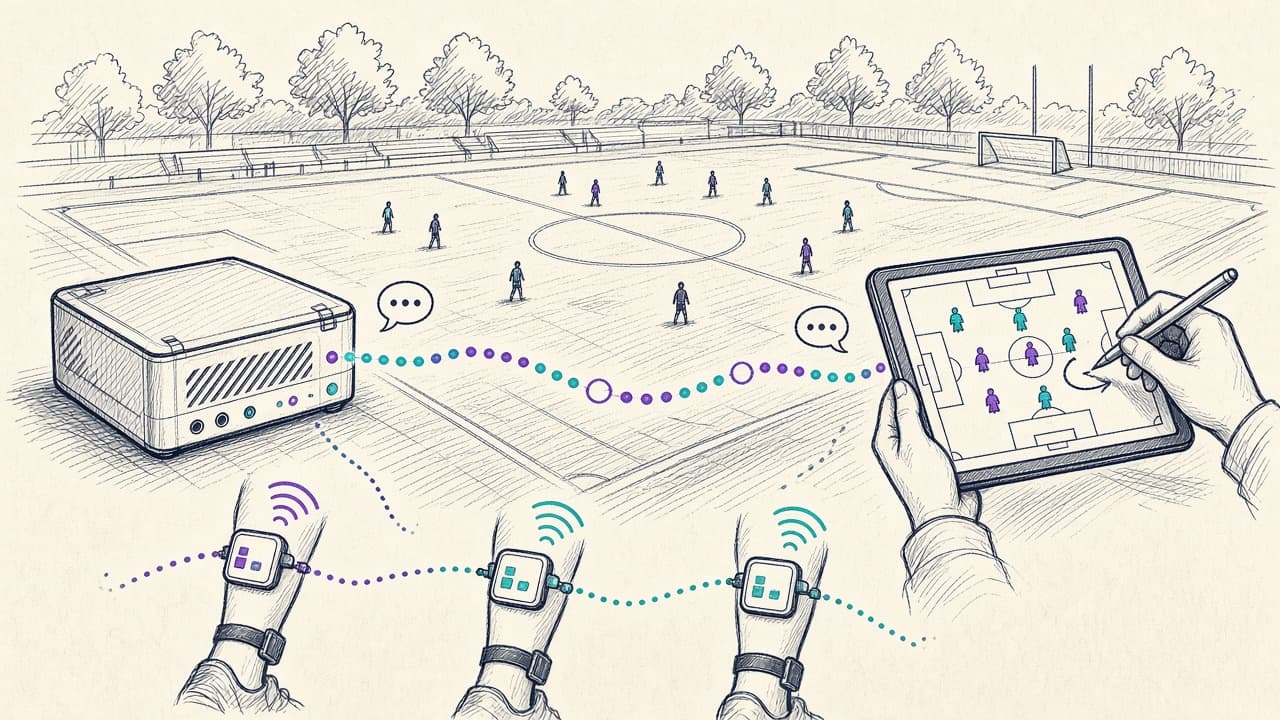
Next11’s coach experience depends on an Edge device that receives data from player tags and makes live performance signals available to the tablet. For WonderIT, that meant treating realtime hardware communication as a first-class product concern — not an integration footnote.
The realtime problem in sports
On a training pitch, connectivity is imperfect. Devices reconnect. Tags drop. Sessions continue anyway. Coaches still need to know what is happening.
A useful realtime layer therefore does more than “show live numbers.” It communicates system health: Are we connected? Which tags are online? Is an update pending? Can we safely start or end a session?
MQTT as the Edge conversation
In the Next11 coach app, MQTT is used to communicate with the Edge broker — publishing commands and subscribing to output and status topics. That pattern fits hardware systems well: lightweight messages, explicit topics, and a clear command/telemetry split.
Around that transport sits application logic: connection lifecycle, client identity, message handling, and UI state that reflects whether the Edge conversation is healthy.
What good realtime UX looks like
- Visible connection status instead of silent failure
- Tag and device awareness before and during sessions
- Graceful degradation when the network or Edge path is unstable
- Clear recovery paths — reconnect, troubleshoot, postpone non-critical updates
- Separation between live operational commands and later analytics sync
Engineering principles we used
Make connectivity observable
If engineers can only debug realtime issues through guesswork, coaches will feel that uncertainty first. Structured logging and status modeling help the product tell the truth.
Keep transport concerns behind a service boundary
UI components should not invent broker details. A dedicated MQTT service/context layer keeps topic handling, reconnect behavior, and publish rules in one place.
Design for reconnects, not perfect uptime
Realtime sports systems should assume interruption. The winning design recovers confidently and explains state changes in human language.
Why this matters beyond football
Fleet tracking, industrial tablets, medical peripherals, venue operations, and field-service tools all share the same pattern: a mobile UI depending on a nearby or edge-local system.
WonderIT’s work on Next11 is a concrete reference for building those products without pretending the network is perfect.
Closing
Realtime hardware-connected mobile software is a specialty, not a checkbox. If your product must speak to devices in the real world, we can help you design the transport, state model, and UX so operators trust what they see.