
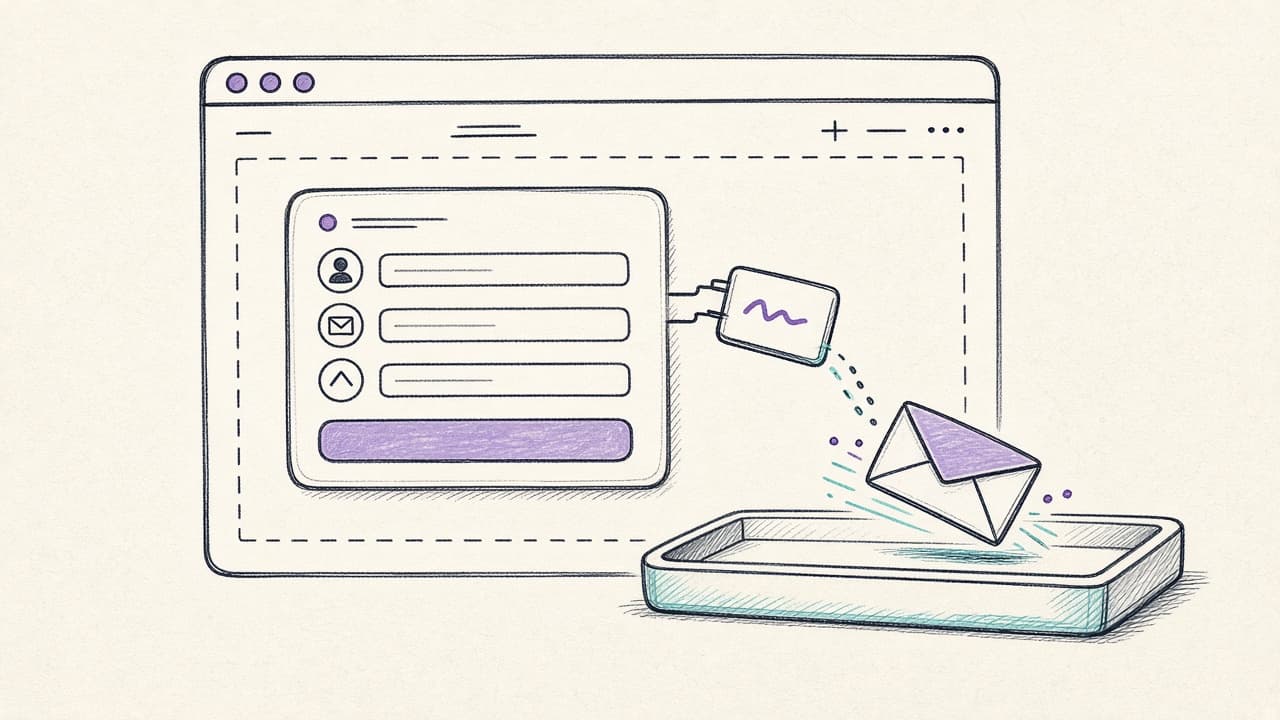
Most “contact us” forms on service websites email the office and die. The interesting version is a form that looks like the company, asks for the right fields, and lands in the same operations product as calls and voice notes.
ServiceBrief AI ships a public embed for that. This post is what we had to make configurable so it is not a one-off marketing page.
Installation has to be a snippet
Owners are not deploying a Next.js app onto the plumber’s WordPress site. Settings offer floating or inline install snippets and a public key they can rotate. The form is a real public route. The script opens a modal or renders inline. That is the product surface, not a Figma export.
Fields are data, not hardcoded JSX
Name, email, phone, message, consent — plus order, required flags, and width. Services are optional. With no services, the form is one card. With services, the visitor picks a service then sees fields. Variations let each service have its own field list when the company wants that; when variations are off, every service still shares the default fields.
Style is limited on purpose: color starters, corners, font, button, a few launcher icons. Enough to look like the site. Not a full design tool that never gets saved.
Preview must not create junk leads
Settings include a live preview that walks the same UI as production, then shows a dummy “request received” without writing a lead. If preview hits the real API, someone will test 40 times and flood the inbox. Form enabled/disabled lives with installation so they can paste the snippet before going live.
Demo what you ship
The product marketing pages load the same widget. Prospects are not looking at a filmed mock. That only works if the embed is stable enough to put on your own homepage. It is a good discipline: if you will not run it, do not sell it.
Leads still enter a review world
A submission is a website lead and can create job intake. It should not skip the rest of ServiceBrief’s rules. The form is a front door, not a second CRM. Keep the visitor on one card, keep the office in one job record.