
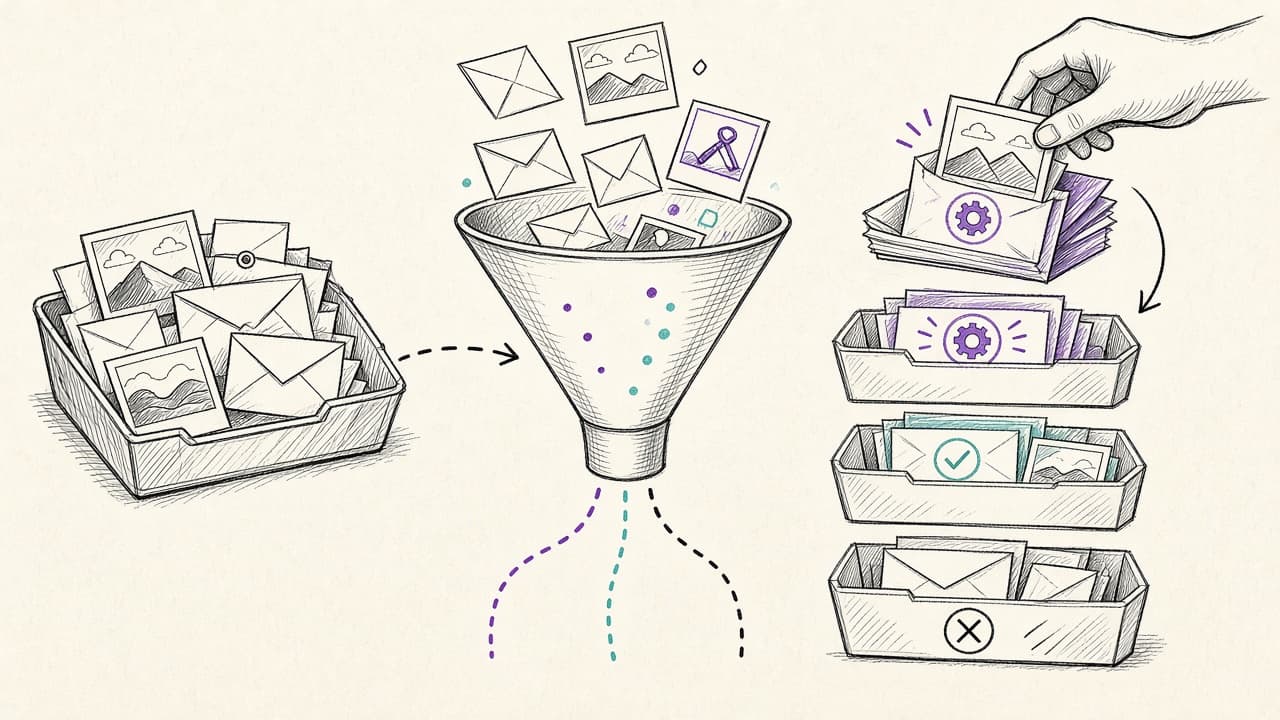
The shop email is where quote requests, “are you coming today,” technician photos, vendor PDFs, and spam coexist. Forwarding that inbox to a human is a job. Forwarding it to an AI that opens a work order per newsletter is a different problem.
ServiceBrief AI’s inbox is review-first. Mail is captured and classified. A manager decides what becomes a job, a follow-up, a quote, or noise.
Connect mail, do not impersonate a mailbox forever
Companies connect IMAP in settings. Sync runs in the background on an interval. Messages and attachments are stored. The product is not trying to be Gmail. It is trying to be the place where service-shaped mail gets a decision.
Classification is a sort, not a close-out
Types we care about include customer intake, quote request, quote discussion, follow-up request, technician update, a document that might belong in knowledge, spam, and unknown. Unknown is a valid answer. Forcing every thread into “new job” trains the office to ignore the tool.
Technician updates about completed work are the exception where email content may already be a visit report. A customer asking for availability is not.
Tabs match the decision
New, needs review, converted, linked, ignored. Search and pagination exist because real inboxes are large. Convert actions are explicit: create a job, a follow-up, or a quote, or ignore. Linking ties a thread to work that already exists so the timeline is not missing the email that started it.
Quotes close in the channel they started
If a quote is in discussion over email, a clearly worded approve or decline can update status. That is still a classification-and-rules problem, not “the model felt positive.” Ambiguity stays in the queue for a person.
Why we did not auto-create reports
Auto-creation looks magic in a slide. In production it creates duplicate customers, jobs with no address, and reports that quote a signature block. The slower product is the one an owner will leave connected.
If you are building intake on email, budget as much design time for ignore/link/convert as for the classifier. The classifier is a model. The trust is the buttons.