
One thing we’ve learned from building AI into real products: the smarter the model gets, the more important the software around it becomes.
We ran into this while building ServiceBrief AI at WonderIT. Imagine a technician leaves a voice note: “AC is running again, but the compressor is pulling high amps. Customer may need a replacement soon.” An LLM understands that perfectly well. It knows the repair is complete, there’s still a potential issue, and there may be a future quote opportunity.
But understanding something and deciding what the software should do next are two very different problems. That’s where we started using Jev AI in the decision flow.
Our approach is simple:
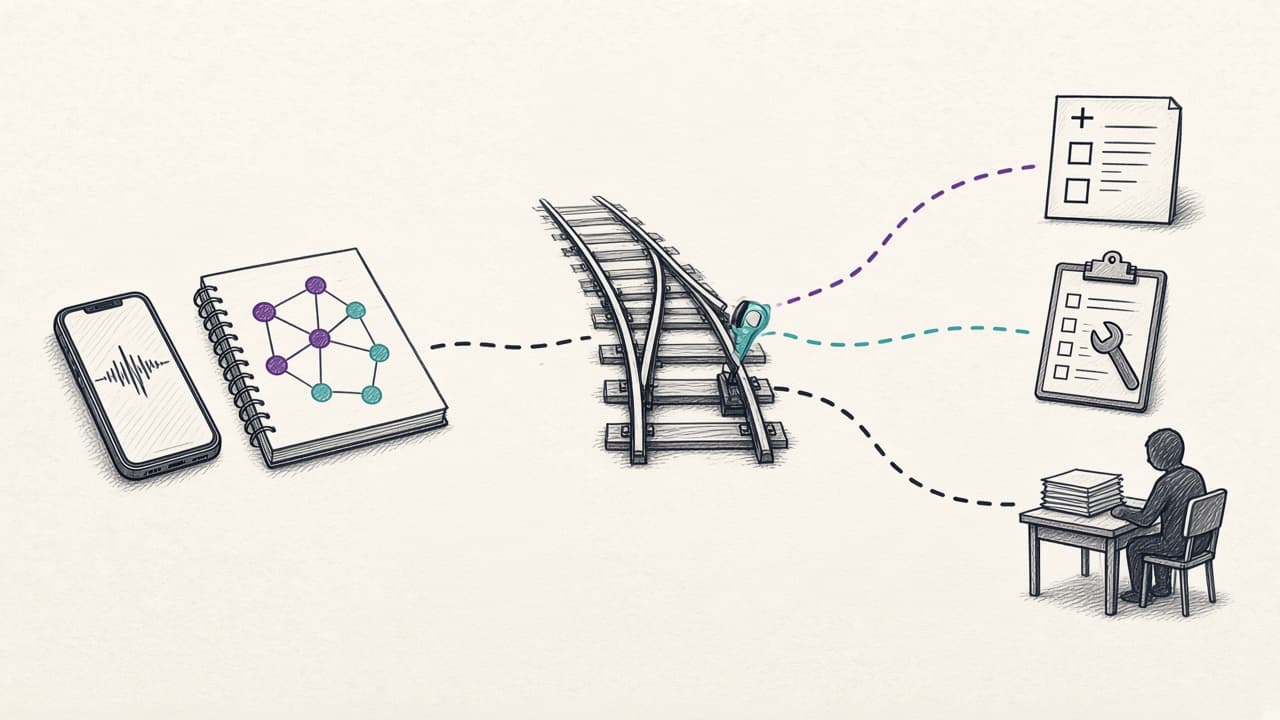
LLM → understand what happened
Jev → decide which path to take
Application → execute that predefined path
I like to think of Jev as a railway switch. The LLM tells us what’s happening, Jev decides which track the workflow should follow, and then regular deterministic software takes over.
So if we detect a potential quote opportunity:
YES → create the opportunity
NO → continue the normal job flow
UNCERTAIN → send it for human review
This solves a bigger problem with AI agents. There’s a tendency to assume that giving an AI more autonomy automatically makes the system better. It doesn’t.
If the same LLM is interpreting the input, deciding what should happen, choosing tools, building the workflow and executing actions, you’ve essentially turned a probabilistic model into your workflow engine. That can look impressive in a demo, but it gets much harder when you’re dealing with real customer calls, jobs, follow-ups and revenue opportunities.
With ServiceBrief AI, we’ve taken a different approach: AI handles the ambiguity, Jev turns it into a constrained decision, and software stays in control of execution.
You still get the flexibility that makes LLMs useful without giving up the predictability you expect from production software.
One question we now ask before adding more autonomy to an AI agent is:
“Could this decision just become an explicit branch in the application?”
Very often, the answer is yes. And when it is, the system usually becomes much easier to test, debug, monitor and trust.